
When a court relies on scientific evidence to determine a case, a regulator investigates the safety of a product, or authorities investigate suspected exposure to toxic chemicals, the reliability of laboratory results can have far-reaching consequences.
In such circumstances, modern laboratory technology is essential. Equally important, however, is confidence in the competence of the laboratories producing those results.
Kenya's efforts to strengthen its scientific testing capacity have received a boost following the acquisition of advanced analytical equipment by the Government Chemist Department, complementing its commitment to internationally recognised laboratory quality and competence requirements.

Strengthening Kenya’s Scientific and Analytical Capabilities
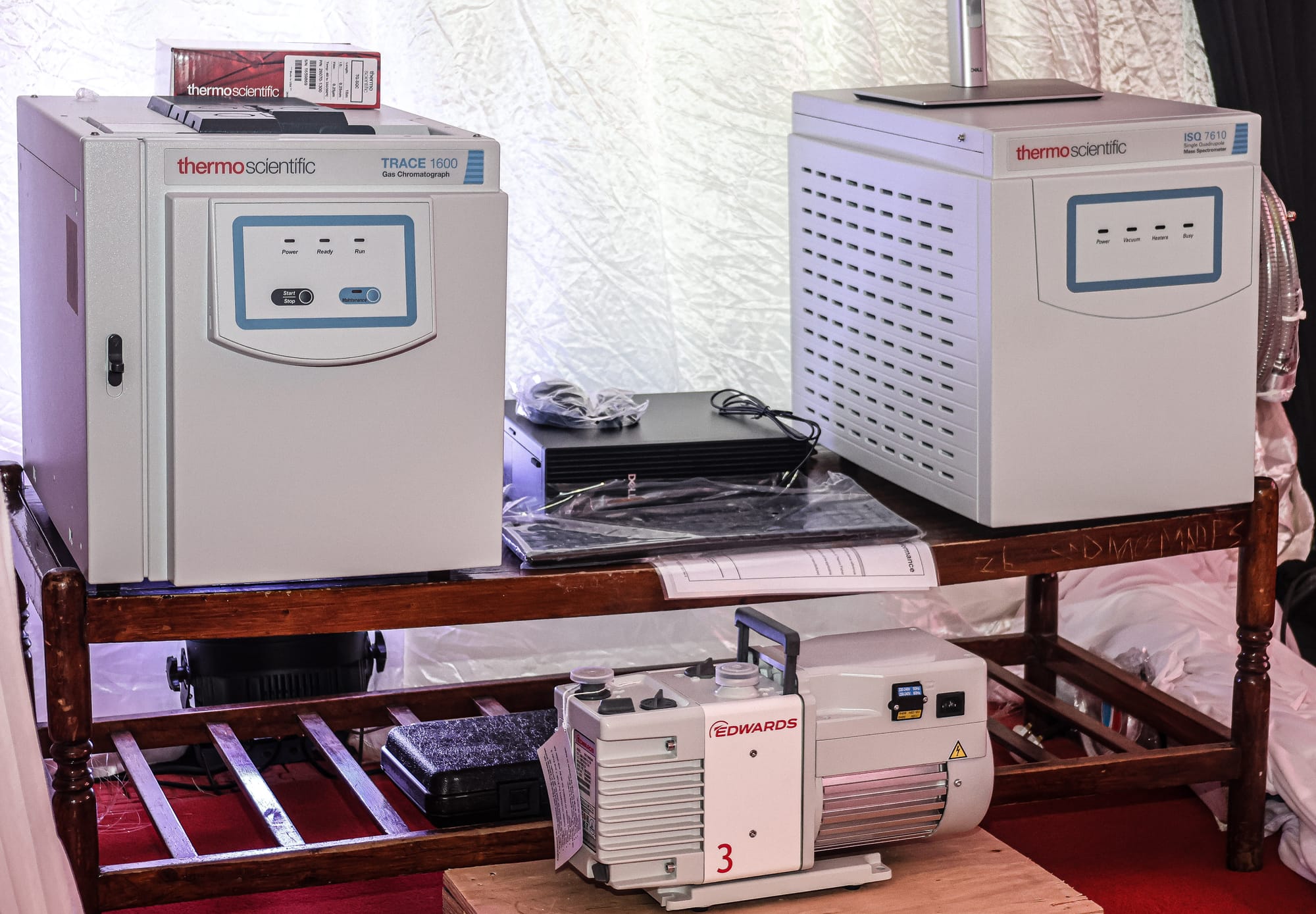
On 26 November 2026, the Government Chemist Department received a Gas Chromatograph–Mass Spectrometer (GC-MS) donated by the Government of India under the Organisation for the Prohibition of Chemical Weapons (OPCW) Mentorship Programme.
The equipment was officially handed over by India's High Commissioner to Kenya, H.E. Dr Adarsh Swaika, to the Cabinet Secretary for Interior and National Administration, Hon. Kipchumba Murkomen, during a ceremony held at the Department's headquarters in Nairobi.
Kenya Accreditation Service (KENAS) was represented at the ceremony by a delegation led by Ms Lucy Namu, Director, Compliance, Enforcement and Quality.
The GC-MS combines gas chromatography and mass spectrometry to separate and identify chemical compounds in complex samples. Its acquisition is expected to enhance the Department's capacity to undertake specialised chemical examinations and support investigations relating to chemical safety and security.
The investment represents an important development in strengthening Kenya's scientific infrastructure and expanding the technological resources available to its laboratory professionals.

Where Technology Meets Accreditation
While advanced analytical equipment enables laboratories to undertake increasingly sophisticated examinations, the reliability of scientific results depends on more than technology alone.
Laboratory personnel must be competent, analytical methods must be appropriate for their intended use, equipment must be properly maintained and measurement results must be sufficiently reliable for their intended applications.
This is where accreditation plays a fundamental role.
The Government Chemist Department attained ISO/IEC 17025:2017 accreditation through the Kenya Accreditation Service in June 2026, marking an important milestone in its commitment to internationally recognised laboratory competence requirements.
ISO/IEC 17025:2017 provides a framework for assessing the competence, impartiality and consistent operation of testing and calibration laboratories.
Through accreditation, KENAS independently evaluates a laboratory's ability to perform specified testing activities competently and consistently within its accredited scope.
The acquisition of modern analytical equipment complements these requirements by providing additional technological resources to support laboratory operations.
Integrating such equipment into accredited testing activities, however, requires appropriate method validation or verification, equipment qualification, calibration where applicable, competent personnel and effective quality assurance measures. Where new testing activities fall outside the existing accredited scope, an extension of accreditation may be required.

From Laboratory Results to National Impact
As Kenya's central institution for forensic science and analytical laboratory services, the Government Chemist Department serves a diverse range of stakeholders, including law enforcement agencies, courts, regulators, government institutions, industry and members of the public.
Its broader mandate encompasses forensic toxicology, criminalistics, forensic biology, food and chemical analysis, water and environmental testing, and chemical safety and security.
The confidence that accreditation provides in testing undertaken within an accredited scope is particularly important because scientific results inform decisions that affect individuals, communities and the economy.
Supporting the Administration of Justice
Reliable laboratory results contribute to the scientific evidence used in criminal investigations and judicial proceedings.
Forensic examinations and chemical analysis can help investigators establish facts, identify substances and provide scientific findings that support the administration of justice.
Accreditation strengthens confidence in the technical competence and impartiality of laboratories undertaking such examinations within their accredited scope.
Safeguarding Public Health and Consumer Safety
Scientific testing is essential in investigating suspected poisoning and assessing the safety of food, water, medicines and chemical substances.
Confidence in laboratory results enables public authorities to make better-informed decisions when responding to health risks, investigating contamination and enforcing applicable safety requirements.
For ordinary citizens, reliable testing contributes to safer products, better-informed public health interventions and stronger consumer protection.
Strengthening Regulatory Confidence and Environmental Protection
Regulatory institutions rely on scientific evidence to assess compliance with applicable health, safety, environmental and product requirements.
Credible laboratory testing supports evidence-based regulatory decisions, pollution monitoring, environmental protection and the identification of potentially harmful substances.
Through accredited conformity assessment, regulators and other users of laboratory services gain greater confidence in the competence of the institutions providing this evidence.

Advancing Chemical Safety and National Security
The Government Chemist Department plays a strategic role in Kenya's implementation of the Chemical Weapons Convention and national chemical safety and security initiatives.
Investment in specialised analytical technology strengthens the resources available to support this mandate.
The Department's ambition to attain OPCW-designated laboratory status further underscores the importance of sustained investment in scientific capability, technical competence, quality assurance and internationally recognised laboratory practices.
Laboratory accreditation provides an important foundation for demonstrating competence, although OPCW designation is subject to its own additional requirements and evaluation processes.
International Partnerships for Sustainable Scientific Development
The donation by the Government of India demonstrates the importance of international partnerships in strengthening national scientific capabilities through technology transfer, specialised expertise and institutional cooperation.
However, the sustainability of such investments depends on the ability of institutions to integrate technology into effective laboratory systems, maintain technical competence and continually demonstrate the reliability of their services.
Accreditation complements these investments by providing an independent mechanism for assessing competence against internationally recognised requirements.
This connection between technological advancement, institutional capacity and accreditation is central to strengthening Kenya's national quality infrastructure.

Building Confidence in Kenya’s Scientific Future
As Kenya continues to invest in scientific and technological infrastructure, accreditation remains an important enabler of confidence in laboratory services.
Through its testing laboratory accreditation scheme, KENAS supports the development of competent and credible laboratories whose services contribute to public health, consumer protection, environmental sustainability, regulatory enforcement and the administration of justice.
For laboratories seeking to introduce new technologies or expand their analytical capabilities, integrating accreditation requirements into these developments provides a sound foundation for demonstrating competence and building stakeholder confidence.
For users of laboratory services, verifying a laboratory's accreditation status and relevant scope is an important step towards making informed decisions.
Ultimately, the value of modern laboratory technology is measured not only by the sophistication of the equipment but also by the confidence society can place in the scientific evidence it produces.
SIMILAR POSTS
All the latest news, resources and expert opinions from us in one place.
Request a callback
We're here to assist you and provide the information you need. Fill in the form below and we'll be in touch shortly.